A link, not a screenshot
A forwarded screenshot loses the quality and everything you know about the photo. A Nostalgia link keeps the full before and after, the names you recorded, and a way for whoever opens it to answer what they know.
Nostalgia - Living Archive
For Families ApartThe albums can stay at your parents' house. Scan them on your next trip, capture the names while family remembers, then keep restoring and sharing from anywhere.
Free starts with 30 never-expire welcome restores. iPhone and iPad are on the App Store, Android is rolling out through Google Play testing, and web is the companion workspace for larger review once you're home.
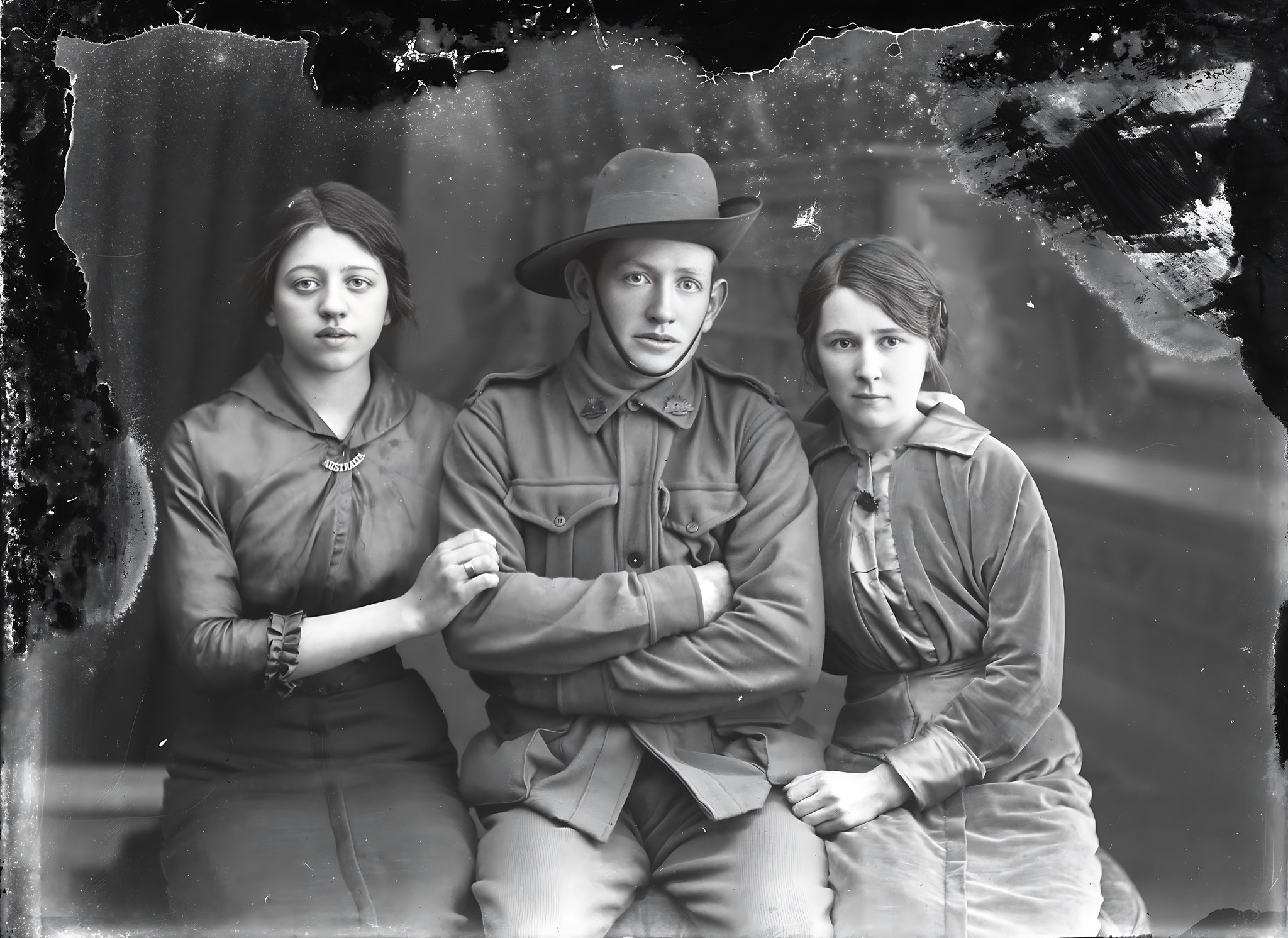 Restored
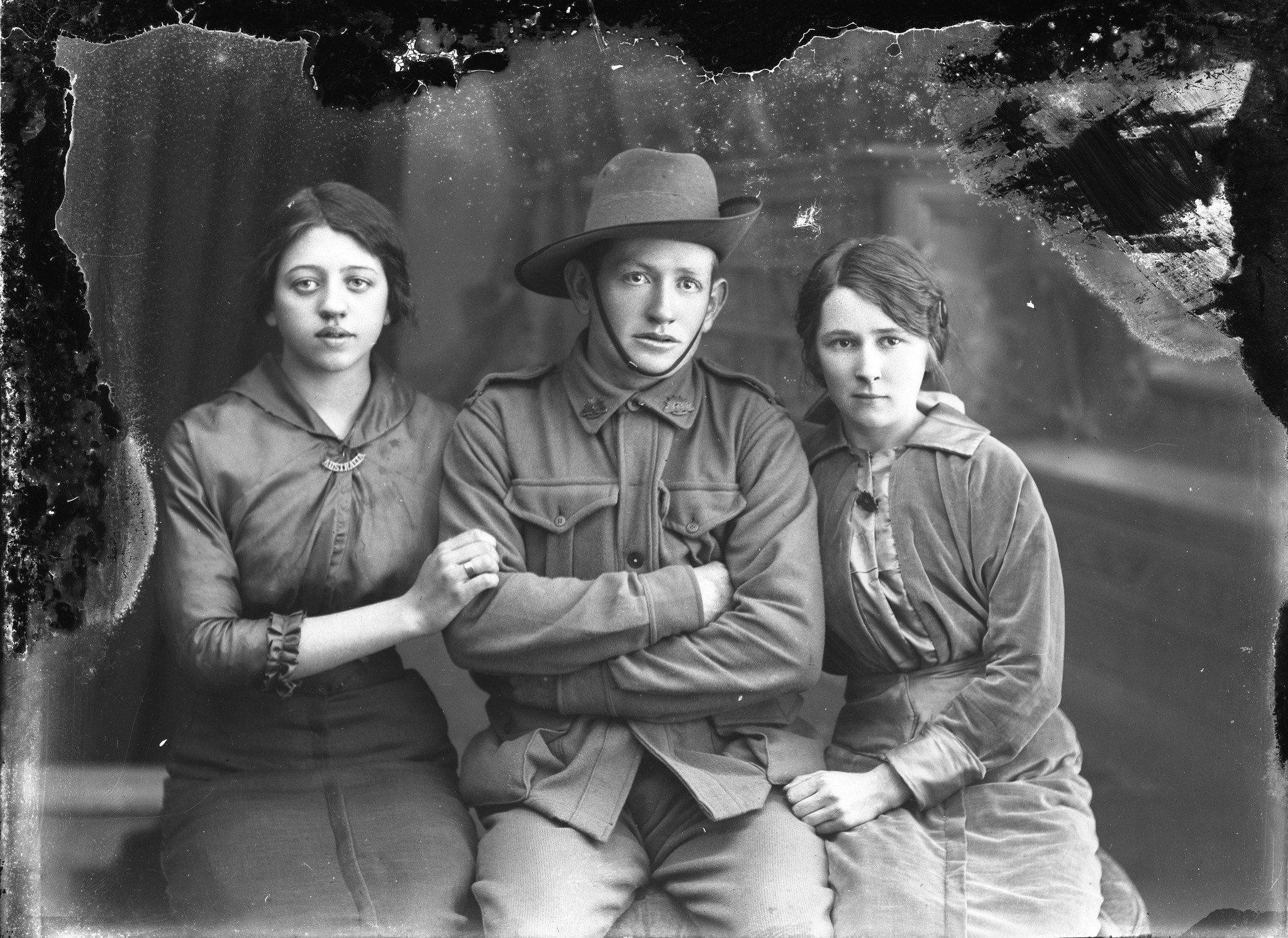 Source
A family photo carried across decades and borders, with the yellowing cleared and the detail brought back.
This is the quiet pattern of family life across borders. You visit once a year, maybe less. The days fill with people, meals, and everything you came to do. The box of albums in the spare room is on the list, and it stays on the list. Then the trip ends, and the photos go back in the cupboard for another year.
And the people who can actually name everyone are a year older each visit. The face your mother can place in a second, the wedding your grandfather can date from memory: that knowledge is the part that fades fastest, and it doesn't live on the print. It lives in the room with them.
 RestoredSource
A grandparent and grandchild, restored. The print can be repaired later. The name has to be captured while someone still remembers it.
The goal of the trip isn't a finished archive. It's to get the photos and the names off the prints and into a place you can keep working from once you're back. Here is a plan that fits inside a real visit.
A stack of albums is a lot of frames. Free up storage so you can scan freely on the trip without stopping to delete things. Nothing needs to upload while you're there: you can review and restore later, at home.
Lay prints on a plain table near a window and let the app capture them. Daylight and a calm background read far better than a lamp at night. An album page can split into separate photos, and glossy prints with glare get a burst to work around the shine.
The back of a print is often where the real record is: a name in pen, a place, a year. Capture the reverse whenever there's handwriting. That note may be the only place that detail still exists.
This is the part only this trip can do. Go through the photos together and write down the people, the place, and the year while the person who remembers is in the room. A print from 1962 carries none of that on its own.
When you're home, file a branch of the collection into a private, invite-only Family Vault and send the link to the family. Relatives in other countries can open it on their own schedule and suggest the names, dates, and places they know. Every suggestion waits for your approval, then becomes part of the photo's story.
Once a branch of the collection is in one place, distance stops mattering. The family is already in a dozen group chats, and that is exactly where a restored photo should land first. Send it there with a question and the replies come back on the photo itself. Then file it in a Family Vault: private, invite-only, never public, and open to relatives in any time zone. The aunt who remembers every name can answer from her phone without installing anything, you approve, and the Archive learns.
A forwarded screenshot loses the quality and everything you know about the photo. A Nostalgia link keeps the full before and after, the names you recorded, and a way for whoever opens it to answer what they know.
An aunt adds a detail you never knew. An in-law remembers the story the blood relatives don't. The record gets richer because the right person finally saw the right photo.
Someone born in a different country, in a different decade, sees a clear face for the first time. That is the whole reason to bring the albums into one place.
Vaults stay private by design. More in the Privacy Policy and AI Policy.
Many families have albums in one home and relatives spread across countries. Nostalgia lets the person with the physical album scan it where it sits, while everyone else can help identify people, add context, and keep the finished archive together from wherever they live.
Start with the practical plan for scanning your parents' albums on your next trip home.
Between 1905 and 1914, families passing through Ellis Island were photographed in the clothes they arrived in. Almost none of their names were written down. We built a public exhibit from sixteen of those portraits with exactly the tools in the app: thirteen plaques are still asking “Who is this?”. Families apart is not a new story; it is the oldest one in the shoebox.
Get the app now so it's on your phone before you fly. Scan a few prints, capture a couple of names with a parent, and see how it feels with one album before you take on the whole cupboard.
Get the appTry it on the web with whatever you have on hand: a scan, a phone photo of a print, anything. Restore one, see the result, and decide from there.