The trip is always too short
If you grew up in one country and your parents' photographs live in another, you know the pattern. You visit, the days fill up with people and meals, and the box of old albums in the cupboard stays in the cupboard. You mean to get to it. You always mean to get to it. Then the trip ends, the albums wait another year, and the people who can name everyone in them are a year older.
Scanning a family's albums is no longer a weekend project with a flatbed. With a phone and an hour at the kitchen table, you can bring most of a collection home with you. And the part that matters most, the names and the stories, is the part you can only capture while you are in the room.
What to bring, and what to leave alone
You do not need equipment. A phone is enough. The one thing worth doing before you travel is clearing some space on it, because you will capture more than you expect once you start.
Leave the albums where they are. Do not peel prints that are stuck to a page or to each other, especially the glossy ones, since that usually takes more of the photo with it. Photograph them in place if you have to. A scan of a slightly imperfect print is recoverable; a print torn in half is not.
- Find the best light you can. A window in the daytime beats a ceiling bulb, which throws glare.
- Lay prints on a plain, matte surface. A busy tablecloth makes them harder to read later.
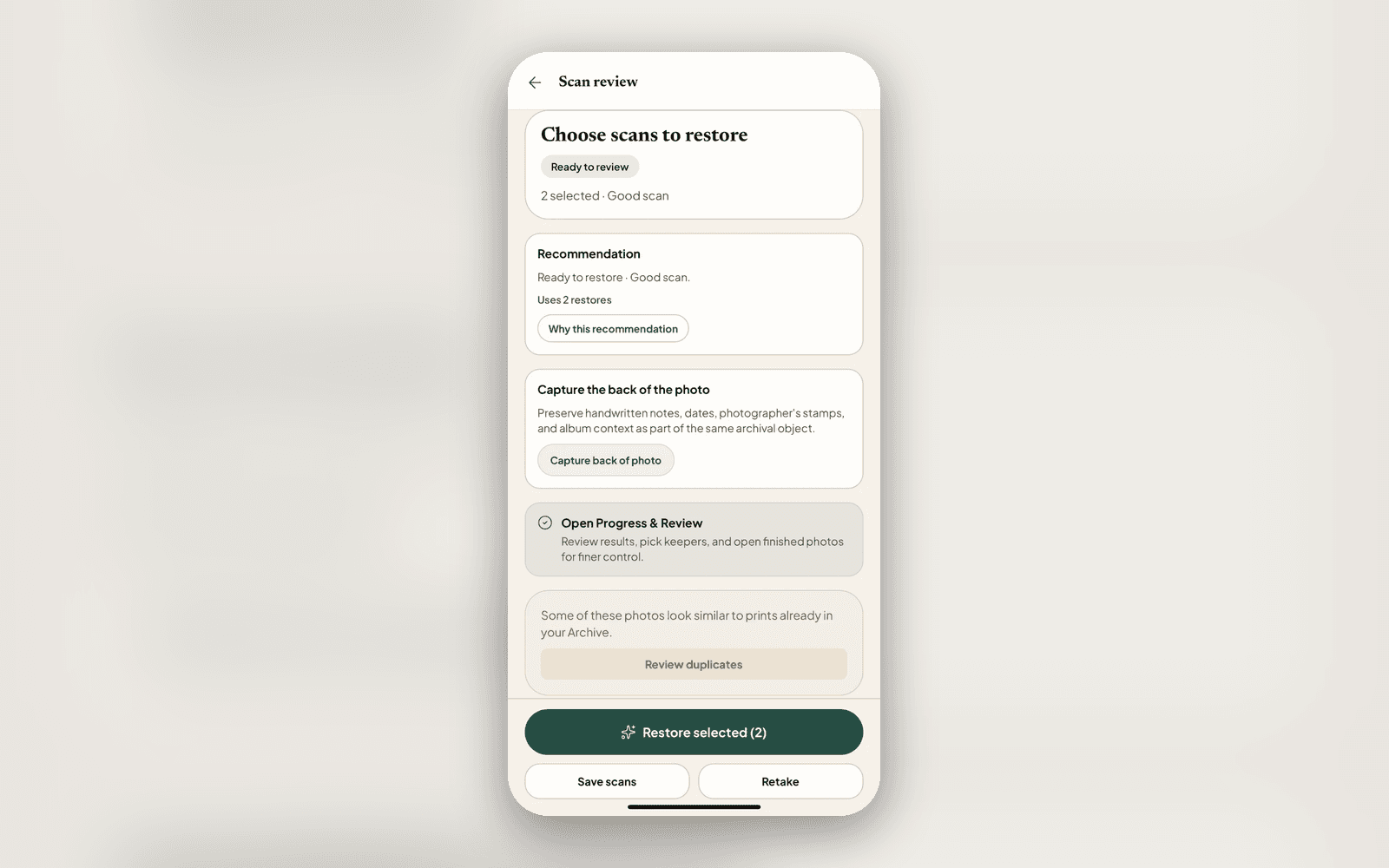
- Work in stacks, not one at a time. Auto-capture fires when each print is flat and sharp, so you can move quickly.
- Turn a few over. The back of a photo often holds a date, a place, or a name in someone's handwriting.
Capture the names while someone still knows them
This is the real reason to do it on the trip and not after. A print carries no date, no place, and no names of its own. The only memory it has is the one a person adds to it, and the person who can look at a 1962 wedding photo and name everyone in the back row will not always be there to ask.
So make it a conversation, not a chore. Sit with your mother or your aunt and go through a stack together. As they talk, add what they say: who is who, where it was, what was happening that day. Nostalgia makes a first guess at the when and the where so you have something to correct rather than a blank field, and it groups the same face across the years so a name you confirm once travels with every photo that person appears in.
Bring the whole family in, wherever they are
When you get home, the photos do not have to stay with you. Because everything works from a phone, you can put a branch of the collection into a private Family Vault and invite the relatives who would treasure it, even the ones three time zones away. Someone remembers a detail you did not, and adds it. A cousin sees a grandparent they never met.
That is the part that makes the hour at the kitchen table worth it. The album was in one house, in one country. Now the whole family can gather around it again, the way families always have.