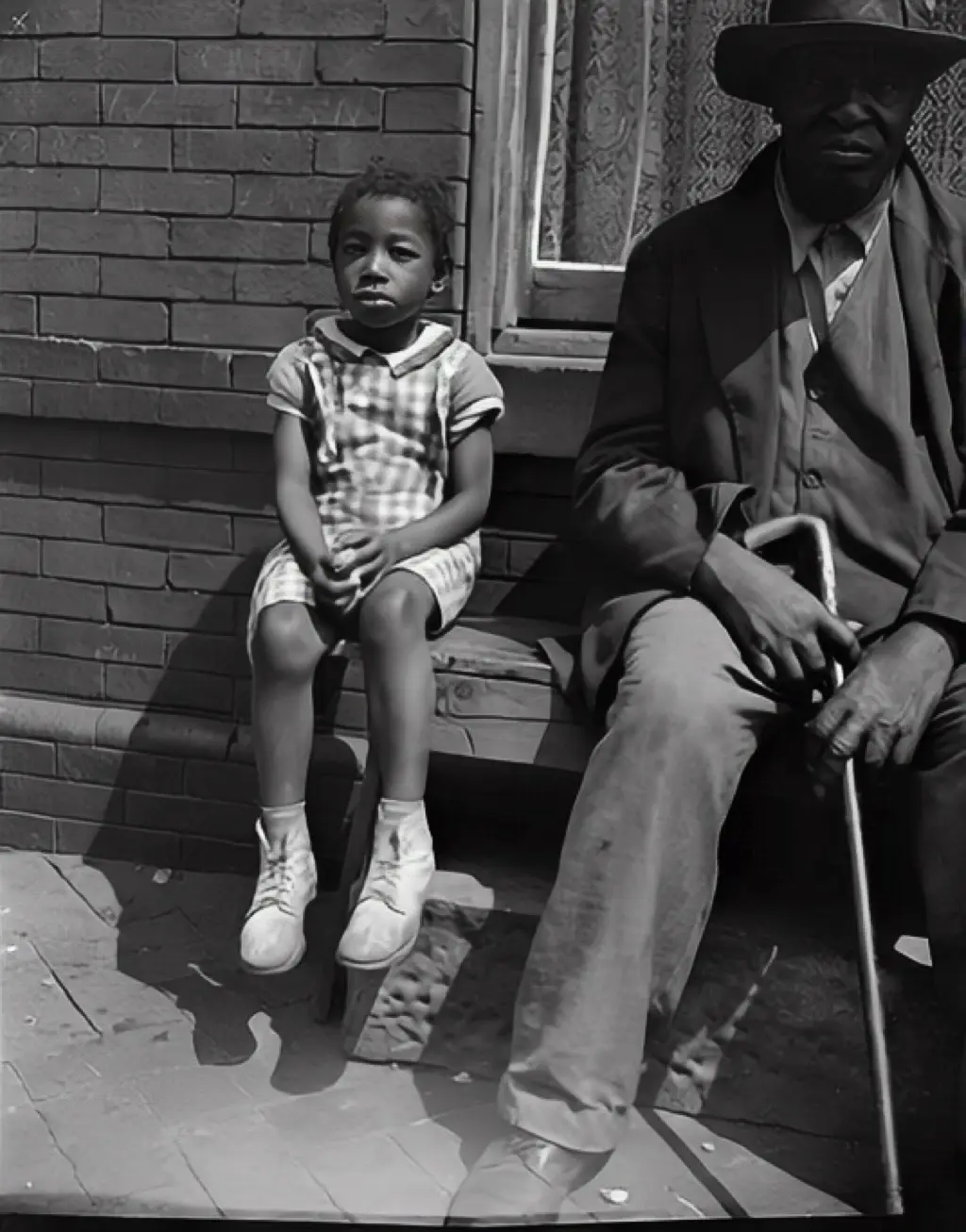
The loss you don't notice until it's too late
When people think about old photos, they think about the damage they can see: the fading, the scratches, the water stains. That part is fixable, and it is the part Nostalgia handles first. The harder loss is quieter. It is the face nobody can name anymore, the friend in the back row, the child who became the grandparent telling the story.
A restored photo with no names is only half a memory. And unlike the fading, this loss has a clear deadline. The people who can identify everyone in a photo from sixty years ago are not available forever. Writing down what they know, while they still know it, is the one part of this you cannot do later.
Make it a conversation, not a project
The good news is that this does not have to be a solemn archiving session. The best version of it is an afternoon with a parent or a grandparent and a stack of photos, letting one picture lead to the next. The names come out naturally when the stories do.
A few things make it easier. Start with the photos that have people in them, not the scenery. Ask open questions: not just who is this, but where was this, and what was happening that day. And capture it as you go, because the detail you are sure you will remember is exactly the one that slips.
- Sit together and go in any order the stories take you. Structure can come later.
- Add the date and place, even a rough one. 'Sometime in the late 60s, the old house' is far better than nothing.
- Note who is missing too. The person behind the camera is part of the story.
Let the tools carry the tedious part
The reason this used to feel like a chore is that you were typing the same details into a blank box, over and over. Nostalgia tries to take that weight off. The photo check makes a first guess at when and where a photo was taken, so you are correcting a draft instead of starting from nothing. It reads the back of a print when there is writing on it. And it groups the same face across the decades, so a name you confirm once travels with every photo that person appears in, rather than one file at a time.
None of it is automatic in the way that matters. The estimates are a starting point, and you stay in control of every name and date. The point is only to make the writing-down fast enough that you actually do it, in the one window when the person who remembers is still sitting beside you.
Why it's worth doing now
There is no rush anyone should feel pressured by. But the prints are quietly aging, and so is memory, and the two do not wait for a convenient year. An afternoon spent naming faces is a small thing that becomes irreplaceable the moment it can no longer be done.
Keep the names with the photos, and you have kept more than the image. You have kept the people in it: who they were, how they were connected, and the story someone told you the day you sat down to ask.