Nostalgia - Living Archive · The Museum
Photo Detective · Investigation 01
A label described him. Another print named him.
Work one real photograph from observation to conclusion. Look first. Read the records second. Keep every unknown visible.
- Photograph
- Augustus Sherman, 14 April 1911
- Case
- One image · two catalog histories
- Time
- About six minutes · no account
Case notes · Work in order
Five moves from looking to a careful name.
Open each note when you are ready. The evidence becomes more specific; the claims should become narrower, not louder.
01ObservationLook before you read
What is visible without assigning an identity or origin?
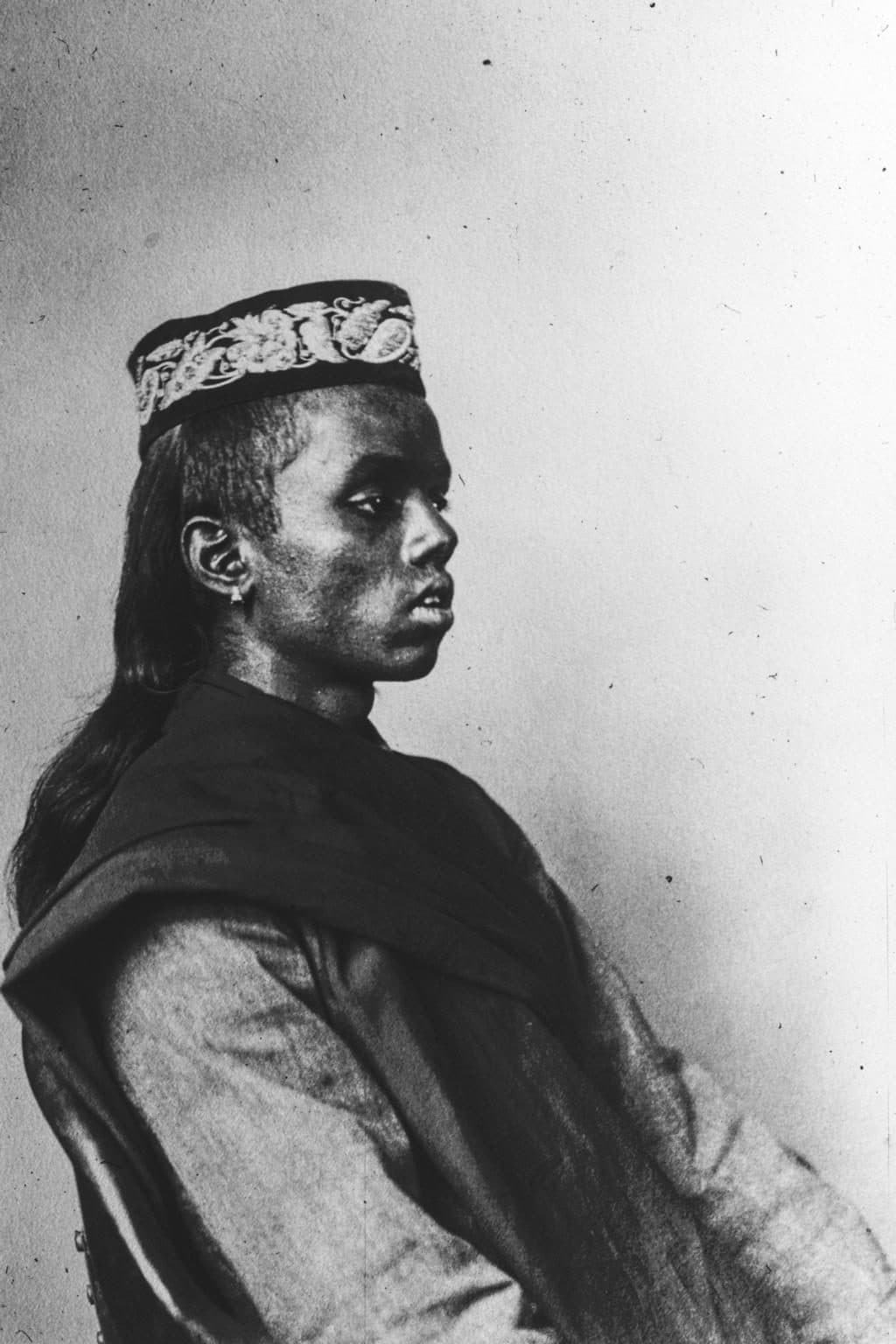
A posed profile portrait. A patterned cap, an earring, layered cloth, and a plain backdrop. Those details are observations. A nationality, religion, occupation, or reason for travel would be inference.
Field note: Write what another person could verify in the pixels. Keep interpretation on a separate line.
02Archive recordRead the first filing label
Does a catalog title identify the person, or only describe the record?
The DPLA-contributed copy reached Wikimedia Commons under the historical title “Hindoo boy.” That title documents how the photograph was filed. It is not a name, and the outdated racial term is repeated here only because it is evidence in the catalog history.
Field note: A label can be evidence about an archive without being reliable evidence about a person.
03Second recordFollow the duplicate
What survived on another print that the first record lost?
The NYPL record cites another print bearing a fuller caption: “Thumbu Sammy, aged 17, Hindoo, ex S.S. Adriatic, April 14, 1911.” The duplicate contributes a name, an age, a ship, and a date. The photograph alone supplied none of them.
Field note: Duplicates are separate evidence objects. Preserve their fronts, backs, captions, envelopes, and catalog records.
04Cross-checkTest whether the records belong together
What makes this more than two similar portraits?
A curatorial comparison on 5 August 2026 found the same profile pose, cap embroidery, earring, shawl, and framing in the two scans and treated them as prints from the same negative. This was a documented visual comparison, not a biometric identification.
Field note: Record the matching features and the method. “Looks the same” is not enough for someone else to audit.
05Careful conclusionName what is known, then stop
What can the evidence support, and what remains outside it?
The record supports the name Thumbu Sammy, an age of seventeen in the duplicate caption, arrival from the S.S. Adriatic, and the date 14 April 1911. It does not tell us who wrote the caption, whether every word reflects his own preferred description, or what his life was before and after this photograph.
Field note: A useful conclusion includes its boundary. Unknown is a record state, not a failure to sound confident.
Field notes opened: 1 of 5.
Evidence ledger
Two records. One conclusion. Several honest unknowns.
- Visible
- Profile portrait, clothing and adornment, plain background, physical condition.
- Documented
- Name, age, ship, and date carried by the captioned duplicate and cited by NYPL.
- Cross-checked
- Pose, cap embroidery, earring, shawl, and framing connect the two scans.
- Still unknown
- Caption author, preferred wording, exact earlier circumstances, and later life.
Take the method
Use the same five moves on another photograph.
- 01Look
Inventory the whole frame, edges, writing, condition, and reverse.
- 02Separate
Keep observation, inference, contradiction, and unknown distinct.
- 03Trace
Open the catalog record and retain its source, date, and wording.
- 04Compare
Treat duplicates as evidence and document the features that connect them.
- 05Conclude
State only what the combined evidence supports, with confidence and limits.
Sources and citation
Check the records yourself.
Suggested citation: “Photo Detective: the duplicate print,” Nostalgia Museum, reviewed 22 August 2026.
- New York Public Library · Image ID 418056Current catalog record, alternative titles, collection, date, and Mesenhöller citation.
- Wikimedia Commons · captioned identification recordPublic-domain scan and the duplicate-print caption used for identification.
- Wikimedia Commons / DPLA · first filing titleHigher-resolution public-domain scan and its source-catalog history.
Continue in public
Take another path through the evidence.
Your photograph, when you choose
Now bring one record of your own.
Start with the best source you have. Keep it private, preserve the Source, and carry the front, back, names, uncertainty, and family answers together.
Restore one photo freePrivate by default. No Museum publication unless you deliberately publish elsewhere.