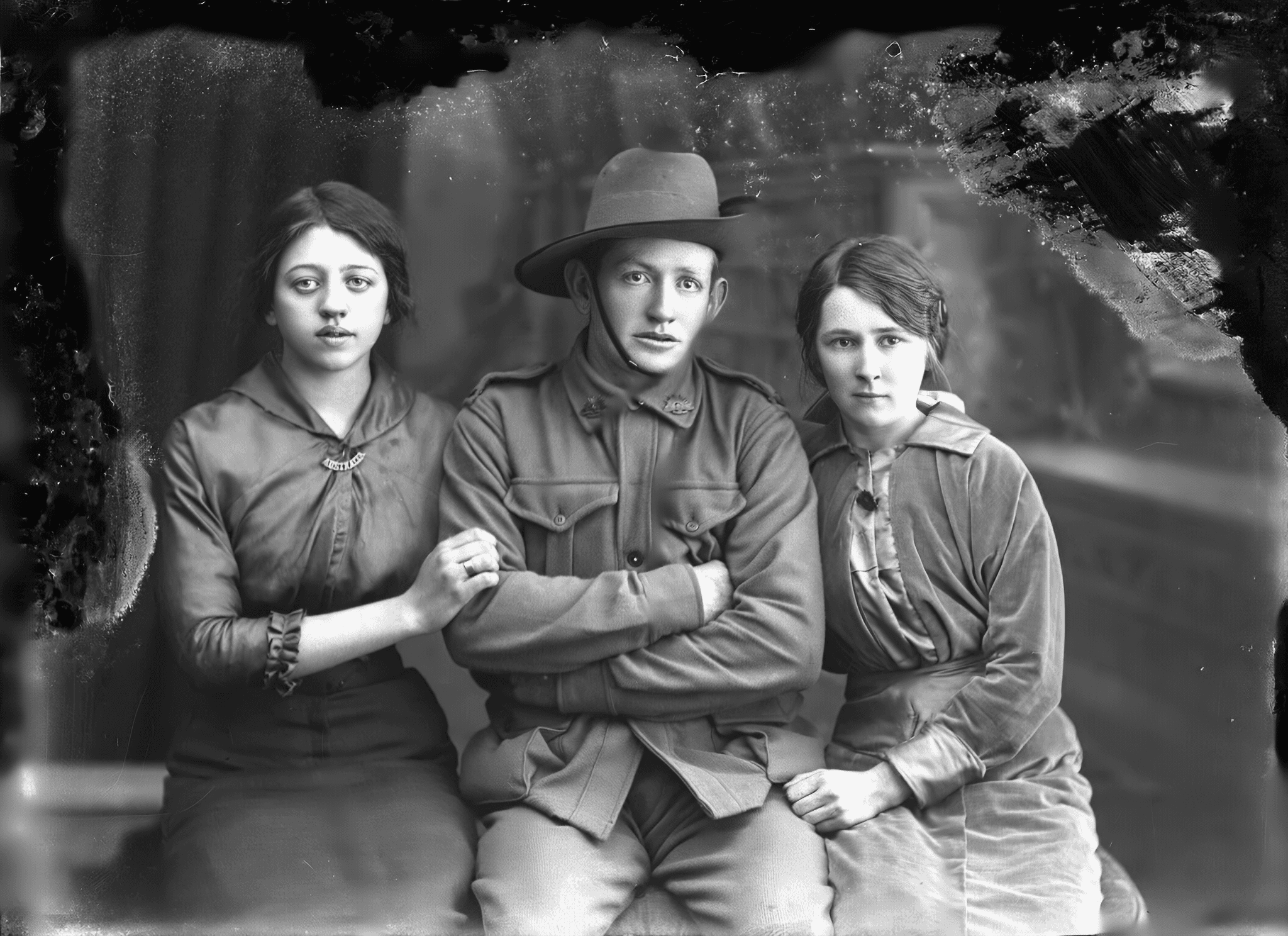
Software cannot tell you her name. Your aunt can.
Restoration recovers the face. It cannot recover who the face belongs to. That knowledge lives in exactly one place: the memories of the older relatives in your family, and the fastest route to those memories is the group chat your family already argues in every day.
So Nostalgia now treats the group chat as part of the archive workflow. When you share a restored photo, you can attach a question: who is this, guess the year, do you remember this day. The link that lands in the chat asks the group the same question you would have typed yourself.
What the person who opens it sees
They see the before and after, the names and story you chose to attach, and the question. They can react with a tap and type an answer right on the page: a name, a place, a year, a memory. No account, no app, no sign-up. This matters because the relatives who remember the most are usually the ones least interested in installing anything.
It works the same wherever the link lands: WhatsApp, iMessage, Telegram, Messenger, email. If an app can open a link, the family can answer.
Review your family’s answers
Every answer comes only to you. Other viewers never see them, and the page never shows who reacted. You review each answer on the photo in your archive and keep it or dismiss it, and a dismissed answer stays dismissed even if someone sends the same one again.
Nothing joins the archive until you confirm it. A guess in a group chat is a lead, not a fact, and the archive should only hold what someone who knows decided was true. That is the difference between a chat thread and a record your grandchildren can trust.